“There’s Something Wrong With the Train…”

I suppose it was inevitable really. For the past five days I’ve suffered from no delays of greater than ten minutes and I’ve only had to stand up once. That’s all been made up for now. 

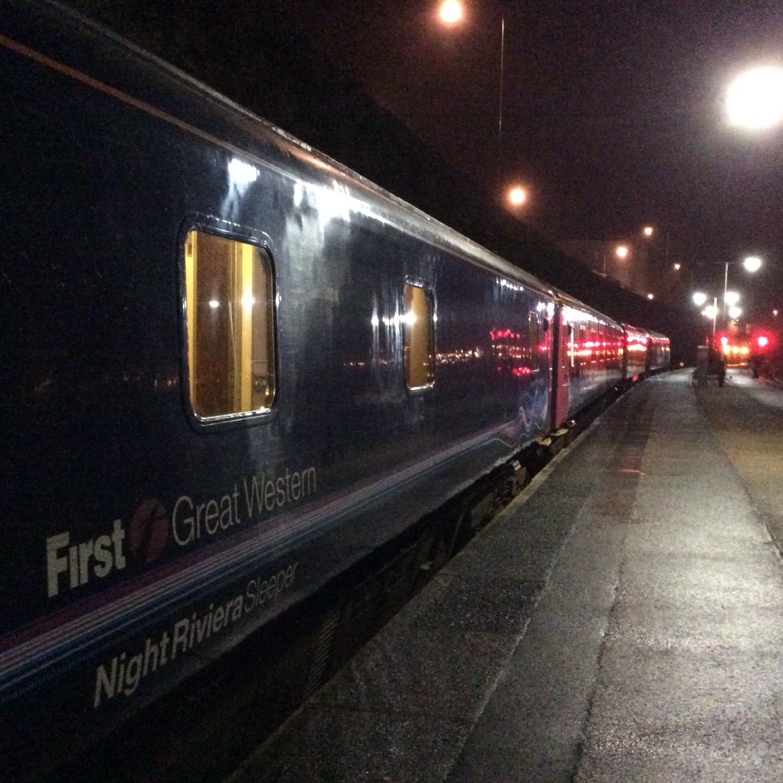
If you’re on a normal train, and it’s delayed, you’re pretty aware if what’s going on. On a sleeper, at 2am in the morning, you’re only vaguely subconsciously aware that something isn’t right. In between dreams I’d clocked that we hadn’t been moving for quite some time. I’d also clocked that there appeared to be a lot of shunting going on and I’d vaguely heard the person in the cabin next to me (who has an early flight from Heathrow) getting quite annoyed. 

At 5:30am my alarm went off. At this point we should have been heading through the suburbs of London. We obviously weren’t and were also going quite fast (for a sleeper). Looking at he national rail enquiries app it stated that we’d arrived at Taunton on-time but had departed there almost three-hours late.

My host turned up with breakfast looking quite sheepish and slightly frazzled. Apparently one of the locomotives hauling us had thrown its toys out of the pram somewhere round about Exeter. Luckily First Great Western had thought of this eventuality and always have two locomotives on the front of the sleeper service. Unfortunately the second one, upset at being so rudely awakened from its snooze and asked to do work, decided it had also had enough at Taunton and promptly followed its companion in breaking-down. So we were stuck.

Luckily the staff at First Great Western, used to all kinds of hardship, rapidly came up with a plan c. You see there was another Night Riviera sleeper, heading in the other direction, which was also hauled by two locomotives. They waited until it arrived at Taunton and then detached one of the locomotives from the front of that service to go on the front of ours. This is now speeding us into London at quite a gallop. 

I suppose my only concern is that, out of the four locomotives of this class being operated by First Great Western tonight, 50% have already failed. That makes me wonder if the one currently pulling us, or indeed the one on the sleeper going the other way, is going to join its compatriots in breaking-up early for Christmas.

Time will tell…

Standard

Through the Night


Having experienced the Caledonian sleeper earlier in the week it seemed only fair that I spend my penultimate night on the ‘rival’ sleeper service – The Night Riviera from Penzance to London. 

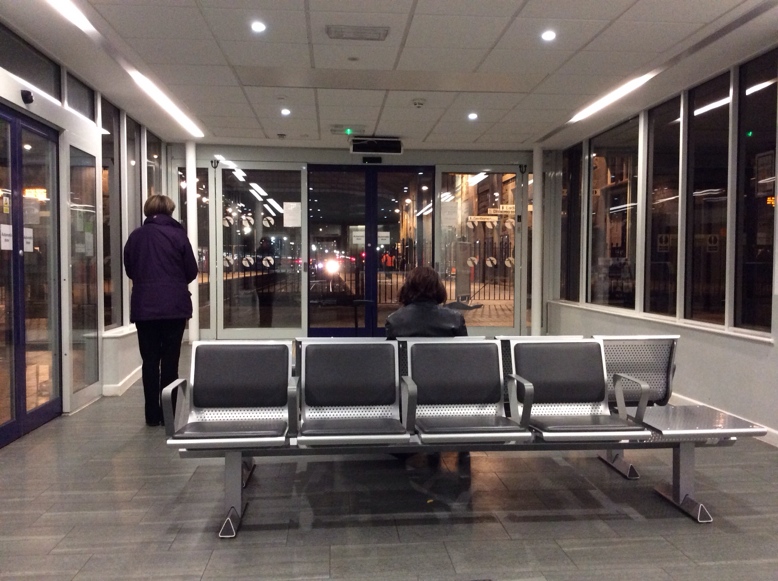
The sleeper services really do hark back to a bygone era of rail travel. You sit in a lounge with your fellow passengers waiting for the special carriages to arrive in the station. When they do arrive (hauled by a ‘proper’ locomotive) you’re each greeted in person by your ‘host’ and walked to your cabin, where your host will talk you through how everything works. A few minutes later they return to take your breakfast order and alarm call time for the morning. You can then head to the saloon / bar carriage, where complementary drinks are served, and spend the evening planning what on earth you’re going to do tomorrow as the Cornish countryside hurries past the window.


Standard

Westward Ho!

Firstly, to clarify, I have not just visited Westward Ho! The only reason it’s the title for this entry is because I’ve been heading west – about as far west as you can go before it gets decidedly rocky and damp. I believe that Westward Ho! is the only place name in the UK to include an exclamation mark, but I stand ready to be corrected on that. I heard someone suggest once that Slough should include a question mark as part of its official name (ie ‘Slough?’) but I think that would be a tad harsh. Having never been to Slough? I can’t really vouch as to whether it’s worthy of its reputation or not.

Once I’d completed my trip down to Falmouth Docks I boarded a train headed for Penzance. The intention was to get off at Hayle to meet up with a friend for a catch-up before continuing west to where I’d be spending the night. I’d been to Hayle a couple of times before, as a stop-off point on the way to the Isles of Scilly, but hadn’t really done much there apart from walk to the beach and back. Wandering around Hayle for a while it became apparent that there wasn’t a huge amount there in terms of coffee shops or pubs. As I had a bit of time to kill I decided to walk to the next stop on the line to Penzance, St Erth – about two miles away – and see if there were better prospects there.
This turned out to be a bad idea for a number of reasons.
The weather was overcast, and not too dark, so I figured it was unlikely to rain in the half-hour it would take me to walk to St Erth. This was correct in the sense that it was completely wrong. It was as if Mother Nature, slightly miffed that I’d been hiding inside tin cans all week, waited until I was at the most exposed point of the walk and then ‘let me have it’. It bucketed it down. And not just from the clouds – a strong onshore wind ensured that it was a Dolby Surround 5.1 rain / spray combo mix. This only lasted for two or three minutes but, in all honesty, that was all that was required. The one saving grace was that once the rain ceased the wind continued, acting as quite an effective drying mechanism.
Upon arrival at St Erth it became clear that my hope that there might be more there in terms of places to eat or drink was wildly misplaced. There was nothing. Zilch. Even St Erth itself was a good mile away from the station that supposedly served it.
Luckily the person I was meeting up with drove to the station via the village centre and had noticed an appropriate pub, The Star Inn, there. This had the three main standard staples for any Cornish pub – cider, fire and a dog – and provided a good opportunity not only for a catch-up but for my bag, and me, to dry out.
The remainder of the journey to Penzance only took twelve minutes on the train and, around about 18:30, I found myself in another seaside resort, in December.

Standard

Falmouth Docks

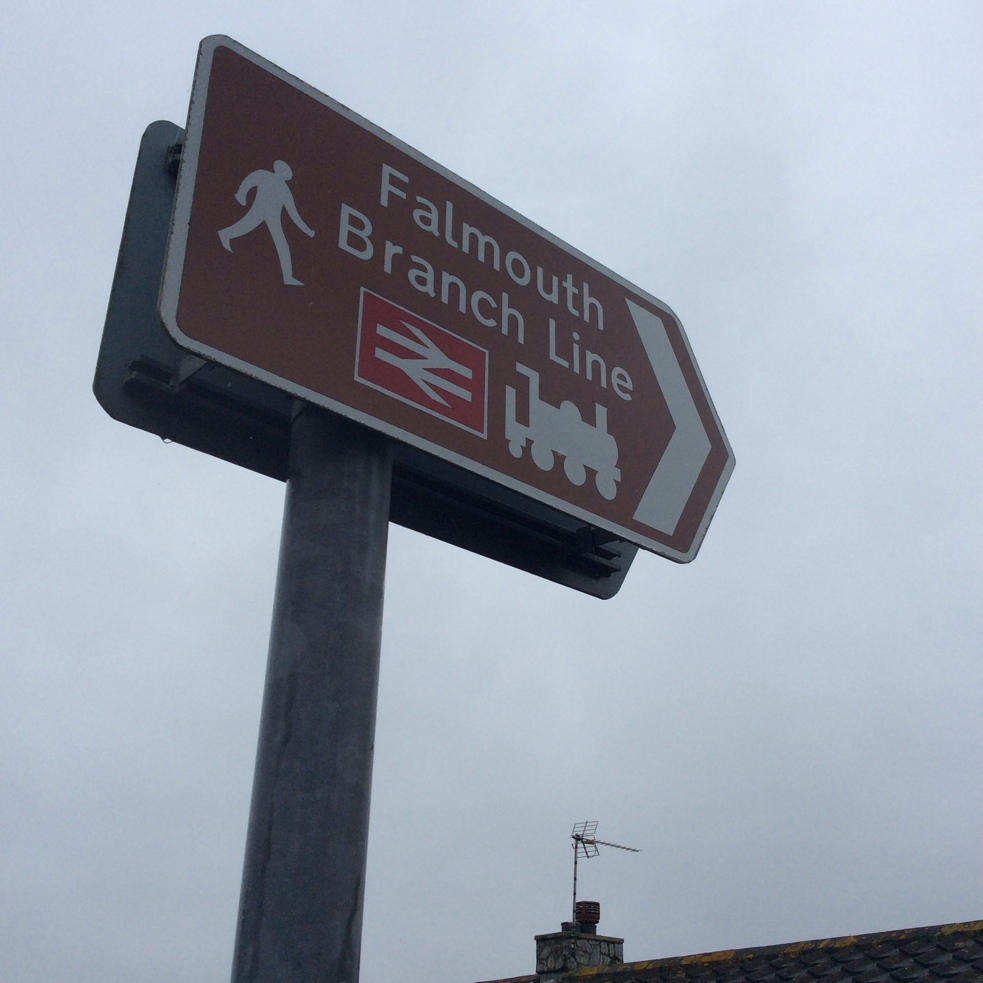
As you head towards Penzance there are a number of opportunities to change trains and go off on branch lines that will take you to either the north or south coast. The most well-know of these are the lines to Barnstaple (which I travelled up to Umberleigh yesterday) and the line from St Erth to St Ives. Less well-known is the branch line that you can change onto at Turo, so this is something I decided to do today.

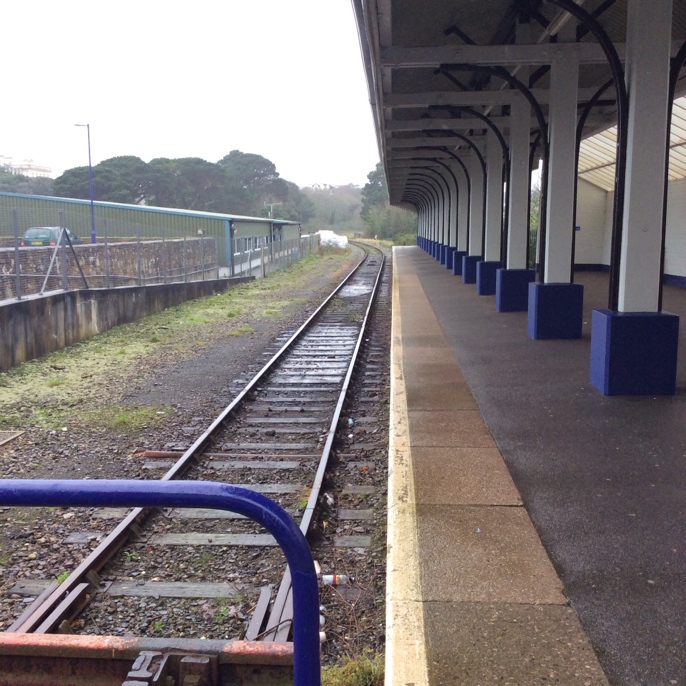
The line that heads off at Turo is known as the ‘Falmouth Branch Line’:

It heads south to Falmouth and terminates at a station called Falmouth Docks. The journey takes just under half-an-hour. When you get to Falmouth Docks this is what you’re presented with:


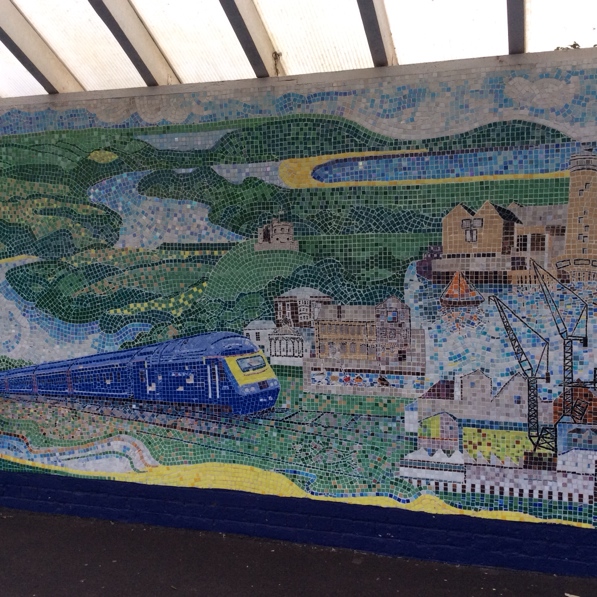
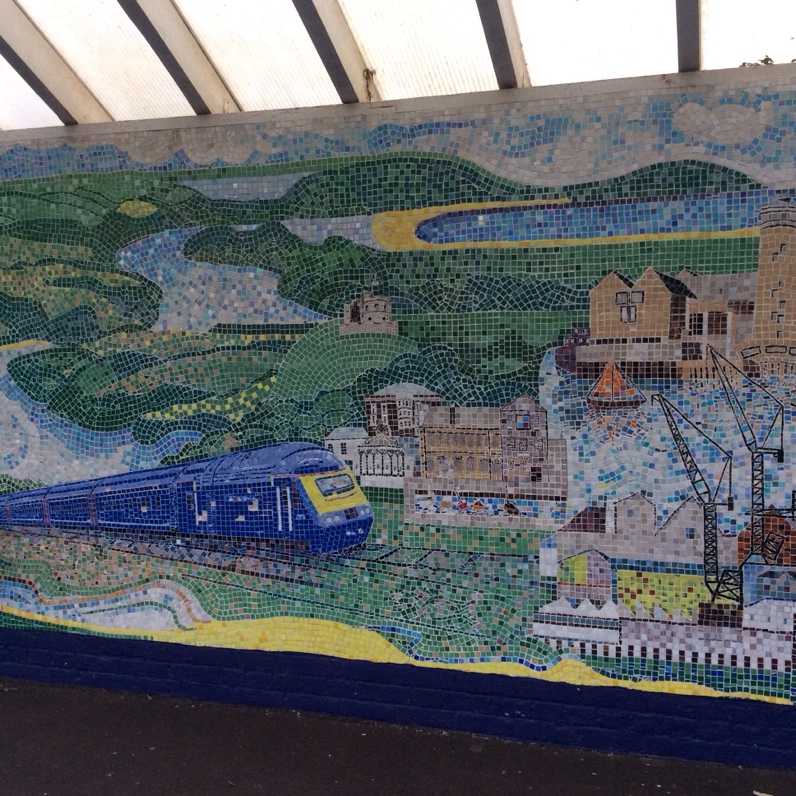
You shouldn’t be put offby appearances though. There is actually quite a bit to do in Falmouth Docks, and a lot of it outside what you can group under he banner of ‘classic Cornish holiday activities’. If you’re not a particularly adventurous traveller then the key attractions of Falmouth Docks are summarised in an impressive modern mosaic in the station building. You could spend your time in Falmouth Docks looking at this:

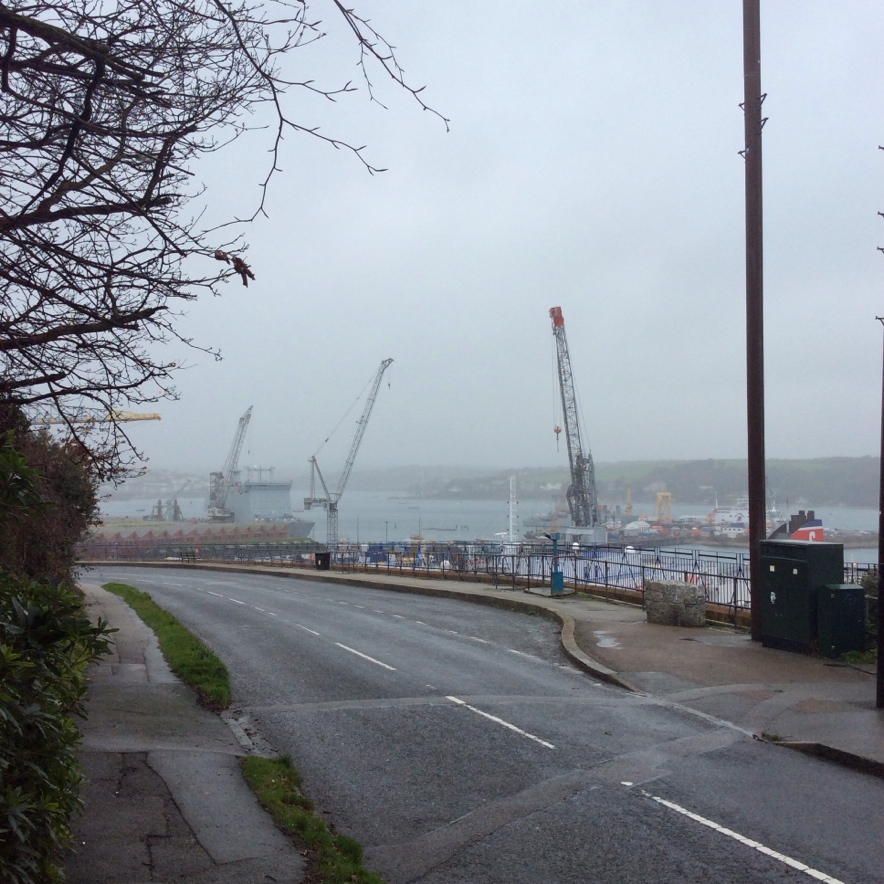
If you prefer going on a bit of a walk though then it’s worth heading out of the station and up the nearby (steep) hill. The first thing you will see its the docks, which are actually quite impressive if you’re a fan of heavy industry:

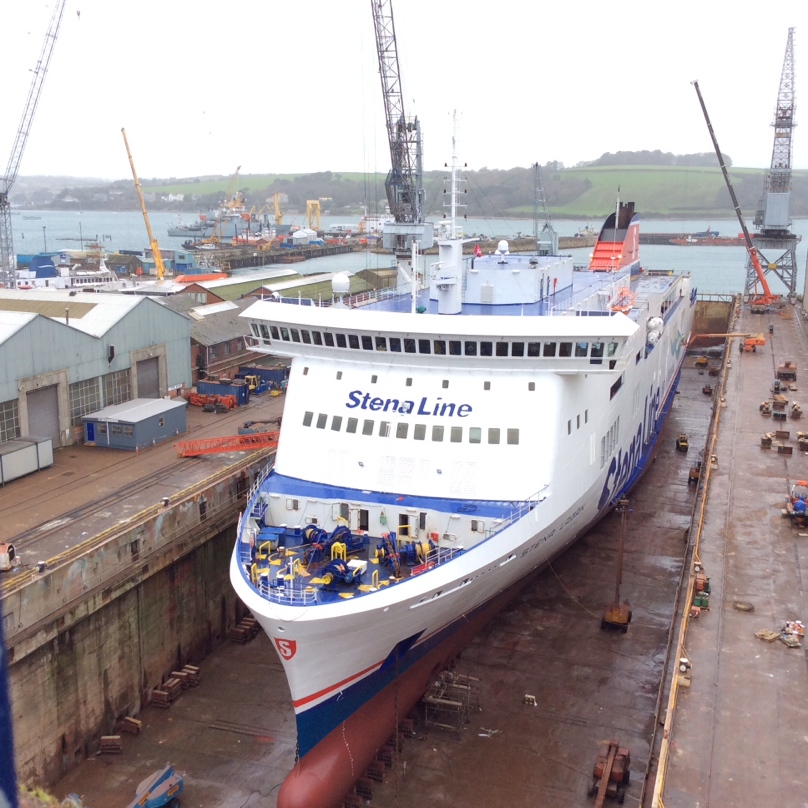
As you head further up the hill, above the docks, you have the chance to see some pretty large dry-docks in which commercial ships are overhauled:

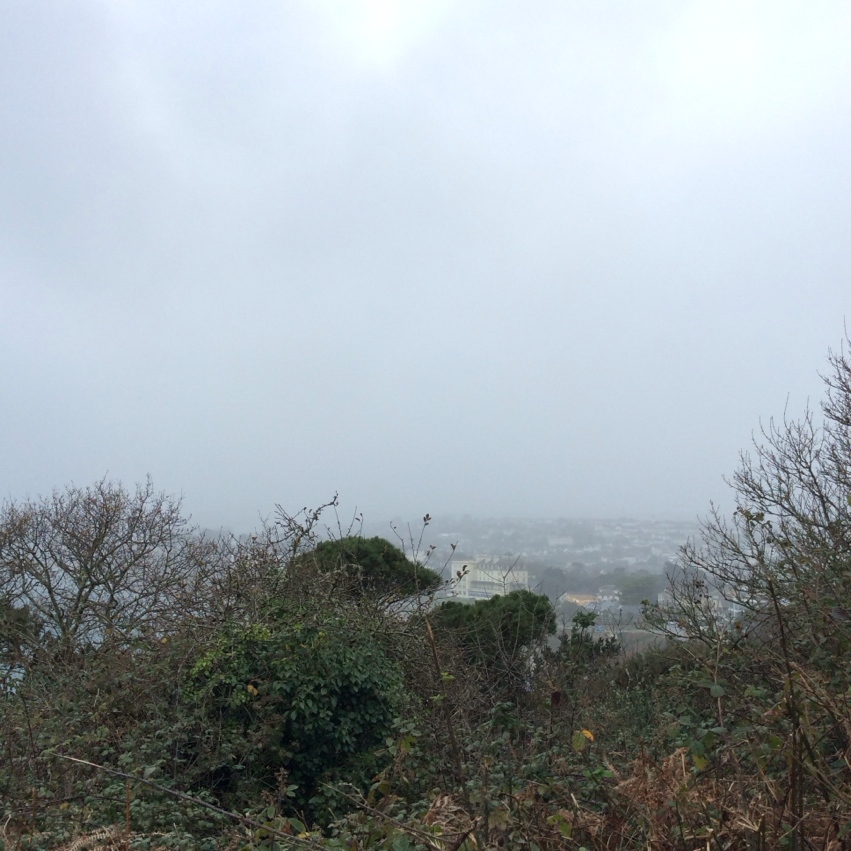
Continuing up the same road and you will start to get some quite nice views of Falmouth itself (even better when it’s not misty!):

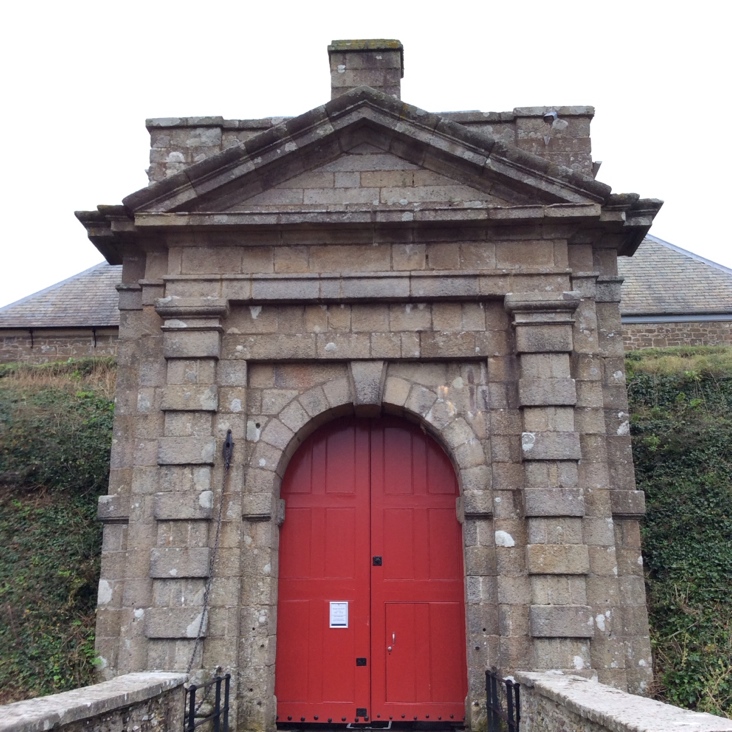
Keep heading up the hill and you will get to (wait for it)… a castle. Yes, a castle! This is the entrance:

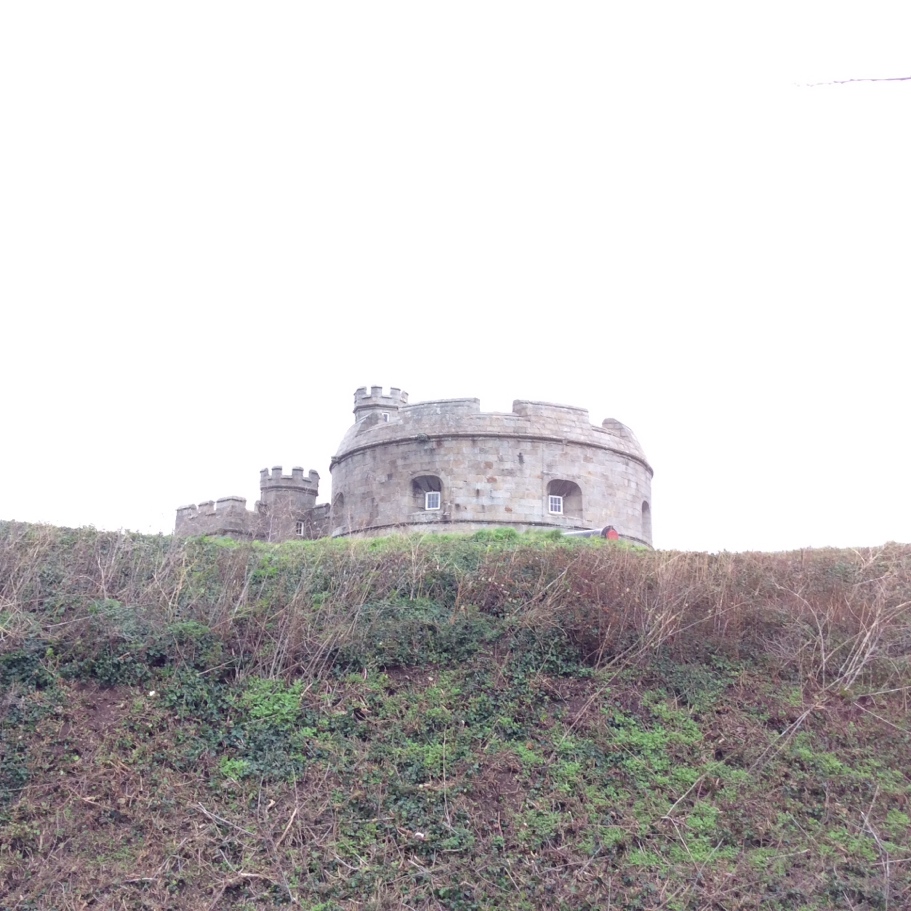
The name of the castle is ‘Pendennis Castle’. And it scores quite highly on the international criteria of ‘what makes a good castle’. It has turrets:

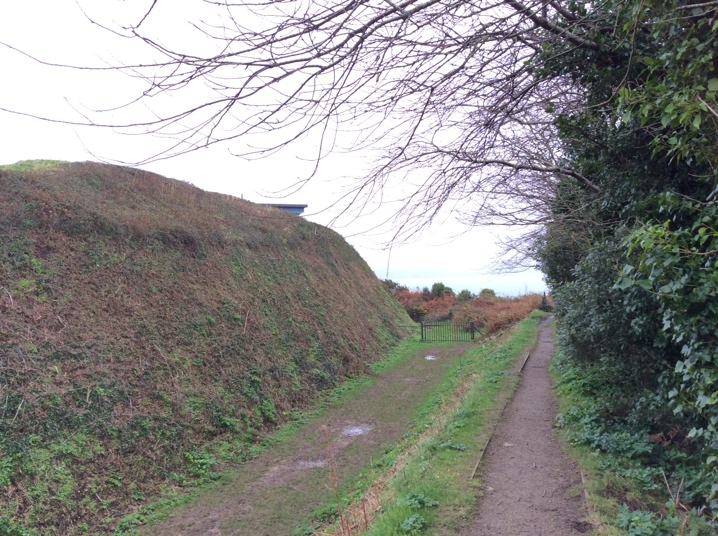
And quite impressive earth fortifications:

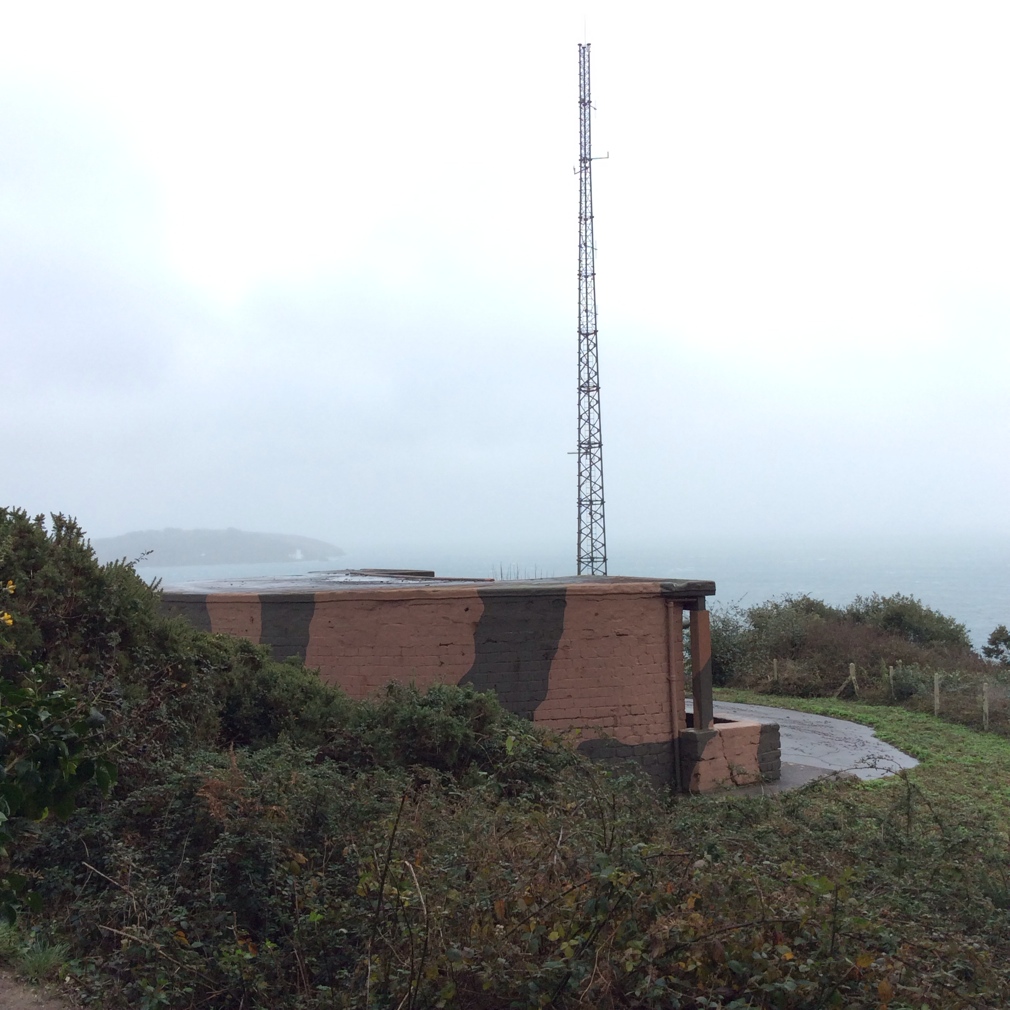
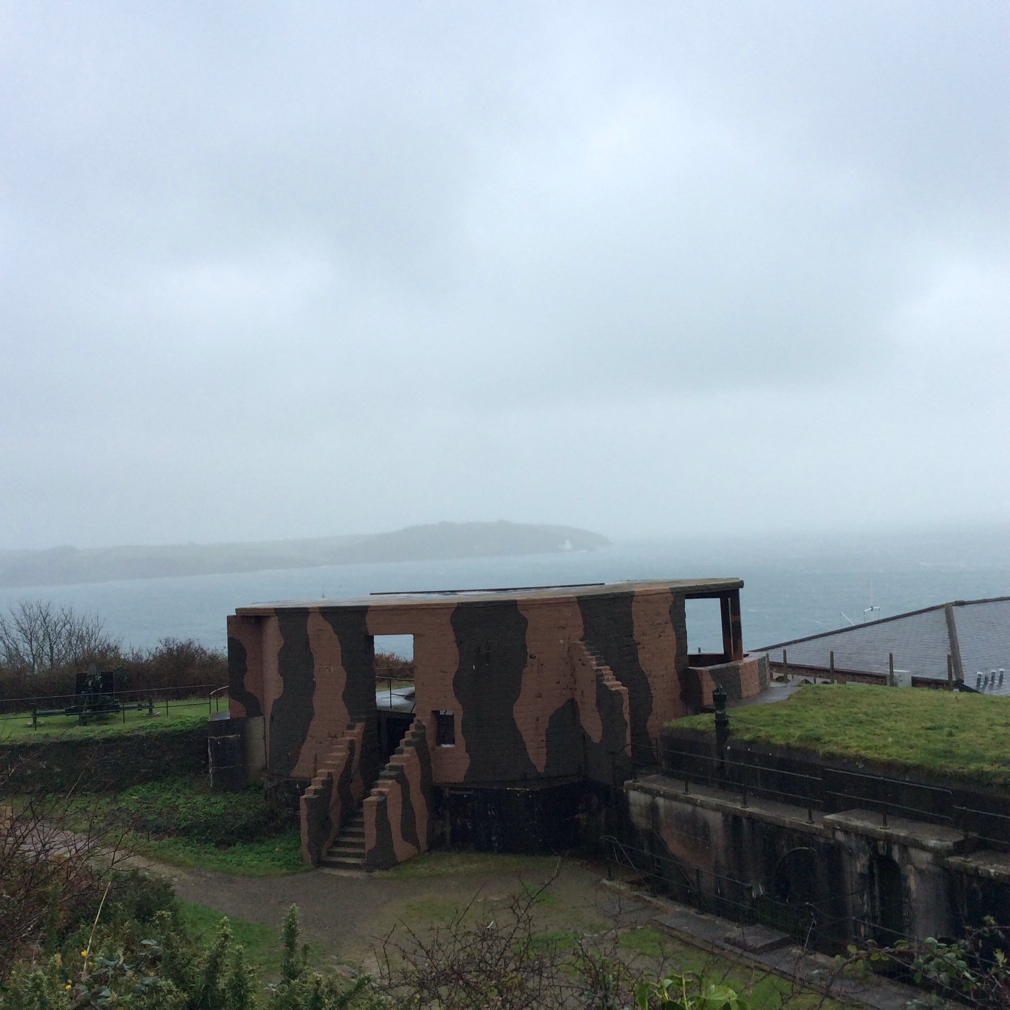
If you keep walking, up beyond the castle, you come across a twentieth century equivalent:

I’m not entirely sure what this is but it would appear to date from the Second World War and could quite possibly have bad something to do with the early radar defence network. If you venture a bit further you will discover it is actually quite a large complex, with good views out over the harbour:

You can then follow a series of woodland and costal paths that take you back round the other side of the castle and ultimately deposit you back at the station (unfortunately by this point it was raining too heavily to take pictures).

So there you have it. Falmouth Docks: The unsung destination of the South West. 

And, just in case you don’t want to get wet, remember that everything I’ve just described is neatly summarised on the mosaic in the station. See?:

Standard

Passenger Types

Having spent much of the past five days on the UK’s rail network I’ve started to see patterns emerging among my fellow passengers. This may be the first signs of madness setting in (which would not be surprising given the whole Pacer incident) but it could also be the beginnings of a brand new field of social research. So, without any further ado, here are some sweeping categorisations that you should be able to assign to 90% of the people you see on any train:

Category 1: The Commuter

Description: This is a migratory type of passenger who’s main habitat is on trains within forty miles of a major metropolitan area. They are incredibly efficient as they have undertaken the same migratory route every day for the past fifteen years. They will generally be dressed in office wear and will know everybody else on the tran, but only acknowledge them subconsciously.
Behaviour: Commuters are pack animals and are most comfortable when surrounded by forty other commuters in a one-metre square area of carriage floor. (Interesting fact: The collective noun for a group of commuters is a ‘surge’). They have a remarkable ability to multitask and will be organising their meetings for the day, drinking coffee, reading a novel and checking Facebook all at the same time.
Common Accessories: The Metro; A book; A tall-double-short-back-and-sides-skinny-whipped-caramel-latte-with-chocolate-cinnamon-and-shot-of-fairy-dust.
Common Sayings: None. As mentioned before, they communicate subconsciously.
Handy Tip: Watch what the commuters do. If they’re all standing by a particular set of doors in a carriage there is a reason for this. Either that is the closest set of door to the station exit or the other doors won’t be on the station platform and will lead you to a bizarre narnia-esque world that is certainly not Bristol Parkway.

Category 2: The iPassenger (TM)

Description: Plugged in and online, the iPassenger (TM) is actually an early prototype cyborg. They will have wires protruding from every available orifice in their clothing and will have their own personal sound system.
Behaviour: The iPassenger (TM) will seek out and cluster round any available electrical outlets on the train, where they will plug in their numerous ‘mobile’ devices to ensure that they can actually work. When they do this, the lights on the rest of the train will often dim. The iPassenger (TM) is a highly-advanced species that no longer requires such things as sustenance from the refreshment trolley, or indeed windows. In fact, the iPassenger (TM) will rarely raise their head from their glowing screen and is usually completely oblivious to anything that’s going on in their surrounds.
Common Accessories: iPhone; iPad; iPod; iPad Air; iWatch; iPlayer; iShoes; iHair; iClothes (etc).
Common Sayings: The iPassenger with only speak if they encounter another iPassenger who has rival technology. At that point an advanced posturing display of one-up-man-ship will ensue, the outcome of which may be some kind of mutual cyber attack.
Handy Tip: In crowded situations the iPassenger essentially acts as a bulldozer, ploughing through the surges of commuters while not lifting their eyes from their technology. Follow them for a clear path through.

Category 3: The Grumbler

Description: The Grumbler doesn’t usually get the train, so sighting one is quite a rare occurrence. They usually get from a to b in their Audi XT-75ST which runs on pure liquid testosterone. They are only on the train because they managed to plough their Audi XT-75ST into someone else’s BMW-A350XWB the previous night and their other car is currently in the garage having a larger exhaust fitted.
Behaviour: The train is an annoyance to the grumbler and they will make sure that the whole carriage is aware of their views. The train will either be too crowded or too empty. It will always be late, even when it’s early. The refreshment trolley will not have what they want and, even if it does, it will too expensive and too hot / cold. Upon completion of their journey they will comment to the carriage about what an ordeal it had been, and how the late-running of the early train means that it is ‘no surprise’ that nobody uses the trains anymore.
Common Accessories: Daily Mail.
Common Sayings: See Daily Mail. (Please! Do not go put and buy one to do this! Just peruse one in a shop from a distance, but make sure none of your friends see you doing this.)
Handy Tip: Always sit upstream of the grumbler with regards to the refreshment trolley. If you sit downstream of them it is unlikely that the trolley will ever get to you, as the grumbler will have demanded the resignation of the person operating the trolley due to the fact that their tea hasn’t been provided in a bone china mug.

Category 4: The Adventurer

Description: The Adventurer is usually found on the large-calibre inter-city lines that emanate from London. They will be accompanied by a fellow adventurer and will be heading to a major city for a day out. They will have been looking forward to this day for the previous two months.
Behaviour: The adventurer will always seek out a table seat where they will sit opposite their fellow adventurer. They will then spread out the most remarkable packed breakfast / lunch you have ever seen and will dine on it for the next hour, while reading through visitor guides to the places they are visiting. They will be amazed at the cleanliness / punctuality of the trains and the speed at which it’s delivering them to their destination. They will always, always have advance purchased tickets and will produce them from the envelope in which they were delivered to their home address.
Common Accessories: On the outward journey, not much more than has been mentioned above. On the return journey however they will be laden down with bags from Harrods and Hamley’s and will spend the journey looking through all the pictures of the wonderful day they’ve just had.
Common Sayings: ‘Isn’t this great?’; ‘Isn’t the scenery wonderful?’
Handy Tip: if you get a chance, make sure you sit next to an adventurer at some point. It will brighten your day and, if you are familiar with the place they’re visiting, you will have non-stop conversation for the next two hours.

Category 5: The Parent

Description: The parent will be accompanied by three children, four buggies, eighteen shopping bags, one phone (held between shoulder and ear) and a large minion toy. They will only occupy a small area on the train but their zone of influence will extend far beyond this, as their foot soldiers (children) set off on expeditions to explore the entire carriage.
Behaviour: The parent exists in a perpetual state of crisis as they attempt to control twelve things at once. They will always arrive on the train with a large number of tickets but some of these will no-doubt be eaten by their toddler during the trip. They will become great friends with the guard as they try to explain why one of their children has decided to illustrate the back of a seat with a surprisingly good likeness of Thomas from Thomas the Tank Engine. At some point they will be forced to sing ‘Let it Go’.
Common Accessories: Far too many to list here. Essentially an entire house.
Common Sayings: ‘A kingdom of isolation, and it looks like I’m the Queen’.
Handy Tip: Do not sit too close to the parent. It is possible that you will become part of their entourage and will suddenly find yourself organised off the train and at a ballet lesson.

Category 6: The Off-Duty Staff

Description: They are railway staff of any description who are off duty. They can be recognised by their distinctive orange plumage and branded workwear.
Behaviour: They are usually seen on early-morning or late-night services heading two or from one of the major rail hubs. They usually travel in pairs but will be friendly with every other off-duty staff member they meet. You can often find them in close proximity to the refreshment trolley, especially if it is operated by someone they know. Despite being off-duty, they will still be required to answer questions, take comments from and carry the bags of any of the other passenger types on the train.
Common Accessories: As mentioned above there will be a hi-vis somewhere. If it is not being worn it will be sticking out of a bag.
Common Sayings: Off duty staff speak a foreign language and it’s best not to get involved. Example: ‘I’ve just finished my stint of earlies but am now moving onto reverse four-day evening weeks (excluding Tuesdays) taking 47s out of central over the spur’.
Handy Tip: Off-dirty staff, like commuters, know the network inside out. Be careful if you follow them though as you may accidentally end up in the depot.

Category 7: The Clueless / Lost

Description: This is a passenger who has clearly gone wrong somewhere in their prior journey and is now starting to realise that fact.
Behaviour: They will exhibit jumpy and slightly-panicked behaviour as they start to deduce that they may be heading away from their destination at some speed. They will try (and fail) to read the names of the stations that are flashing past the window at 120mph. They will try (and fail) to read google maps to get an idea of what county they’re in. At stations they will be paralysed by a terrible bout of indecisiveness that will ultimately lead to them being left on the platform as their bag merrily continues it’s journey on the train. This will later tread to a security alert that shuts down the entire network for several hours.
Common Accessories: None. Most will have been lost in previous bouts of indecisiveness.
Common sayings: ‘Is this the train to X’?
Handy Tip: You may well laugh at the plight of the lost passenger but beware: One day it’ll be you.

Category 8: The Sleeper

Description: Every train has one. This is a passenger who will be asleep for the duration of their journey.
Behaviour: Asleep. Possibly snoring.
Common Accessories: Pillows and a Duvet.
Common Sayings: None. They’re asleep. Will occasional mutter something about earmuffs and cookies.
Handy Tip: Do not occupy the space between the sleeper and the train door. At some point, usually just after the train has arrived at their destination, the sleeper will wake up, panic, and head to the door at remarkable speed. If you get in the way you will not survive.

Category 9: The Blogger

Description: Undoubtedly the coolest of all train passengers.
Behaviour: Borderline sociopathic tendencies as they write about those surrounding them on the train. Ridiculous set-ups involving technology and wires to try and post something to their blog while in the highlands of Scotland.
Common Accessories: A very large rucksack.
Handy Tip: If you sit near this passenger it is likely you will be stereotyped.


Standard

Bristol Temple Meads

As I headed back into Exeter this morning, on a damp and slightly-overcrowded train, I started looking through my pictures from yesterday. I noticed that I hadn’t said anything about Bristol Temple Meads, despite being there for over an hour to change trains. If you’ve never been to Bristol, the older part of Temple Meads station is an impressive and imposing structure. Originally designed by Brunel, it reminds me of the industrial look that many of the London termini used to have.

I visited Bristol many years ago, I believe the first time I ever went on a ‘high speed’ train, and had memories of this looming structure filled with angry, growling locomotives. I remembered there being an atmosphere of blue diesel smoke and lots of people walking around with bags piled high on luggage trolleys (which seem to have gone out of fashion on the rail network now).
When I arrived at Bristol yesterday afternoon I was surprised to disembark the train onto a platform that looked nothing at all like my memories. I only had hazy images in my mind but they bore no relation to the station I’d just arrived at. Unfazed, I headed down into the subway to walk under the lines and up to the main entrance to the station and platform 4, where my next train was going from. Climbing up the stairs I was suddenly transported over twenty years into the past – it was all there! The daunting, high-arched roof, the industrial feel and the (slightly less angry) growling diesels.
The last time I’d been here, aged something-in-the-single-figures, I had snapped a quick picture at the end of the day, prior to getting on the train back to London. This was in the days of ‘proper’ cameras that had this crazy thing called ‘film’ in and, as this was the end of the day, the photo I took of Temple Meads station was the last one on the film. In fact it was that extra ‘free’ photo you sometimes got on the end of the film roll, after you’d passed the 24 or 36 mark. Consequently, when the film was developed, the picture of Temple Meads was only half there, the right-hand side of the photo having run off of the end of the film roll.
(As an aside, I remember when we once got a film for the camera with 36, rather than 24, photos on. We’d opted for this extravagance as we were going on a two-week (rather than one-week) holiday to Wales and thought we’d be able to use the additional twelve photos. It was a special event. They had to get the ’36’ film out of a locked cabinet in Boots and, this may be a figment of my imagination, but I’m sure it was ‘bigger’ that the ’24’ film. When we got the film home we had a little ceremony to install it in the camera. We considered inviting the neighbours round. Despite all this, I distinctly remember that we were utterly incapable of using the massive number of photos we had available on the film, and the final three pictures were, in fact, of the inside of the car on the way home from the holiday).

Yesterday I took about forty photos through the window of the train in a twenty second period just to try and get a good one of some sheep.

Back at Bristol I decided to try and replicate the photo I’d taken all those years ago. Here it is:


I couldn’t get in the exact location because of the large expanse of bike racks. It’s near enough though, and this time doesn’t have the right side of the picture cut off.
Who knows, maybe I’ll be back in twenty years to take another…


Standard

DPR of Devon

Earlier in the week I discussed at some length the issues surrounding Scottish independence. That’s a question that won’t be settled any time soon. If you narrow your focus to England however, every ten years or so there is a mini ‘movement’ which promotes the cause for Cornish independence. It’s usually a similar argument – Cornwall is a long way from London and the Cornish people aren’t always sure that the politicians in Westminster adequately represent their views and opinions. (It could be argued that this is the case for most English regions, but let’s not go there!)

Cornish independence is therefore something that most people are familiar with. But what about Devon? You never hear about that.

The Democratic People’s Republic of Devon. 

It has a nice ring to it.

Apart from the inevitable hundred-years war with Cornwall, I can’t really see any downsides to a Devonian state. In fact, I’d be one of the first in the queue at the immigration office. Every time I’ve been to Devon it’s been the same: wonderful countryside, welcoming people, excellent food, warm hospitality and some of the best cider in the world. Who wouldn’t want to live here?
I think I’d do ok on the Devonian citizenship test. I’m confident I’ve mastered the ‘proper’ order to apply the clotted cream and jam in when preparing a cream tea and I have an improving knowledge of the local geography. I’ll admit that, being a Londoner by birth, I might struggle on some of the agricultural questions and I’m not entirely up to speed on Devonian history – but I’m sure these are things that can be rectified with time. The only issue may be that I’ve spent a fair bit of time holidaying the the Scilly Isles, which are technically Cornwall, but I think I could argue the case that they are far-removed from the central Cornish regime.
So how about it Devon? Is it time to break free from the shackles of London (and Cornwall) and go it alone? Let me know.
On a serious note: If you’ve never been on holiday to Devon then you’re missing out. I’ve never had a bad experience here and the wonderful meal and reception I’ve had here in Umberleigh tonight have only reinforced my affection for this county. Come to Devon: Whatever the weather, you’ll be warmly welcomed. (Blackpool take note).

Standard

And so to Umberleigh.

Today was very much a logistics day. I think every trip has one – it’s that day when you just need to get from a to b (via c, d, e, f and g) to ensure that the rest of your trip works out as planned. I had to cover a fair bit of ground today so got up early to get out of the dead-end that was Blackpool. (I don’t mean that in a disparaging way: Blackpool is a dead-end as far as the rail network’s concerned – you could say there’s two ways in and no way out.)

From Blackpool I headed south through Preston to Chester. I’d thought a fair bit regarding what to do about Wales. You can head into Wales on a number of different railway lines (North Coast, South Coast and out to the mid-Wales Coast) but none of them really offer a circular route. I don’t know why I qualified that with ‘really’, it’s simpler than that: none of them offer a circular route. This is a shame as I know the scenery of rural Wales is some of the best in the UK and this lack of lines certainly wasn’t always the case – we have a man called Dr Beeching to thank for that.
As a compromise I decided to head straight down the centre of the country, from Chester in the north to Cardiff in the south. This route certainly challenged the belief that England is the ‘green and pleasant’ land. You’re presented with mile after mile of rolling hills, sheltered glens, babbling brooks and thousands and thousands of different varieties of sheep. Maybe that poem by Blake – now so cherished by England cricket supporters – was, in the original version: ‘And did those sheep, in ancient times, walk upon Wales’ mountains green’. This would seem to make sense as the next line of the song does make reference to ‘holy lambs’…
I couldn’t spend as much time in Cardiff as I would have liked. The heavens had opened by that point and there’s only so much of the city that you can see in two hours without getting completely drenched. The station had an essence of the old New Street about it and must be an interesting place to try and get through if there’s a Wales home game at the Millennium Stadium.
From Cardiff I headed across to Bristol and then south to Exeter. The train from Bristol to Exeter was operated by Cross-Country and hence fitted in with their usual policy of ‘why have eight carriages when you can have four’. Consequently I spent the journey crammed into a vestibule area with three trainee drivers from First Great Western, who’d just had some kind of final rules test in Bristol. They spent the journey comparing notes on the various questions contained in the exam and getting increasingly worried as they kept receiving calls from their boss which would cut out as soon as they answered them (obviously the use of mobile opines on fast-moving trains wasn’t covered in the exam). Nevertheless, I think I’m now well-versed on all the various reasons as to why it may be acceptable to pass a signal at danger (and the procedures associated with them).
From Exeter I headed north to Umberleigh.
‘Where?’
Umberleigh.
‘Where?’
UMBERLEIGH
‘Where?’
UMBER- oh forget it. It’s south of Barnstaple.
‘Where?’
BARNSTAPLE
‘Where’s that?’
Devon.
‘Oh that place they make custard?’
Wait what? Yes, I suppose so.
‘So where’s that then?’
Sigh. In the South West.
‘What, like next to Wimbledon?’
What?!
‘Or more like Staines?’
Are you from London?
‘Possibly…’
Right. If you head in a straight south-westerly line directly out of London you will find this place called England. You should go there some time.

Anyway…where was I? Ah yes, Umberleigh. It’s a small village in Devon which happens to have a railway station (request only), a hotel (‘The Rising Sun’), a pub (see previous) and one-bar of 3G phone signal (if you stand in the car park by the station facing towards the river). (There is also a restaurant south of Umberleigh that does the best honey-roasted carrots you will find anywhere in the UK – but that’s a different story).
I made my way to the hotel which was brightly decorated with Christmas lights. Entering through the door marked ‘reception’ I was greeted by a small dog. ‘Are you the owner?’ I asked. He tilted his head at me, barked once (which I took to mean yes) and ran off to find one of his employees.


Standard

Pendalino Progress

Early this morning I had to catch a Virgin Pendalino the short distance from Preston to Warrington Bank Quay. I was sat at the end of a carriage, adjacent to the toilet, and was reminded of the Pendalino toilet problem that used to blight many a traveller’s journey.

Over ten years ago, when the Pendalinos were first introduced, I used to regularly travel from London to Birmingham as part of my ‘commute’ to Tywyn. The Pendalinos had replaced the ageing HSTs and were, to many passengers, quite new and shiny. A feature of the Pendalinos were the (comparatively) large toilets with the automatic sliding door. This seemed a world away from the cramped, usually semi-functioning toilets that had been on the old trains and should have been a blessing. Unfortunately, there was a problem.
People were so taken aback when they entered the toilet that they’d usually stand there awe-struck for a brief period of time. Their attention would then be drawn to trying to find a way to close the door but – wait – it was closing itself! How modern, they thought, how futuristic. What they didn’t know was that the door was on a timer, and would close after a set period of time so that, after people had used it, it wouldn’t remain open indefinitely.

This meant that, when the door closed automatically, it hadn’t locked.

I remember sitting there many a time on that train to Birmingham watching the same routine:

1. Person goes into toilet.
2. While they’re figuring out how to use it, door closes automatically.
3. Some time passes.
4. A second person arrives, looking to use the toilet.
5. The second person presses the door open button.
6. Chaos ensues.

This happened like clockwork and resulted in a whole generation of people who became too scared to use the toilet on a train.
So I was sitting there this morning and…guess what happened? A person came to use the toilet. They opened the door. They walked in. They looked around, trying to figure out how to close the door and then – wait – the door started closing itself! As the door slid to I waited for the inevitable but then, suddenly, an automated voice from inside the toilet blared out:

ATTENTION! ATTENTION! TOILET DOOR IS NOT LOCKED!

I kid you not.

How’s that for progress?

Standard

Blackpool (in December)

When writing these blog posts I’ve tried not to be too harsh about any particular location I’ve visited. This is primarily because I haven’t been able to spend that much time in any one place and I think it’s a bit rich to do a hatchet-job on somewhere after only a few hours exposure. The exception to this, of course, is the Pacer trains, which deserve everything I can throw at them. (I did actually dream about them last night. It was a very strange dream in which the Pacers were pursuing a load of palaeontologists around a small island in the pacific. I don’t want to say too much about it as I’m worried that Universal Pictures might get wind of it and use it as the plot of yet another Jurassic Park sequel. But the best part of the dream was when an aged Dr Malcolm yelled at the pacers: “You should be extinct!”. Couldn’t agree more, Ian.)

The upshot of all of the above is that what I’m going to present here are my views of Blackpool as it appears in December. I accept that is is probably not the best time to visit Blackpool, it could quite easily be the worst, but I can only work with what I’m given. So here (with that caveat) for your perusal, is my account of Blackpool, in December:

I have often wondered what the world would be like after a relatively major virus pandemic. The eerie opening scenes of the film “28 Days Later” went some way to answering that query, but if you haven’t every seen that film I’d suggest that you can get a pretty good idea by visiting Blackpool, in December.
The train pulled up into Blackpool North station at around ten minutes to six and the three surviving passengers quickly melted away into the night. The station concourse was deserted with the exception of a large, silent, dog, that tracked me with its one functioning eye from the platform to the station entrance. I followed the main road down to the coast, only encountering one person on the way – a woman, who asked me if I had 12p to allow her to make a phone call. I wondered where exactly she was planning on making the call from; the only pay-phone I’d seen had no windows left and no phone inside.
I made it to the promenade and turned right to head north to my hotel. Behind me, the once-famous Blackpool tower stood there in splendid isolation, its top half covered in flickering blue lights but it’s bottom half boarded up. The general illuminations were still functioning on the road down to the tower itself but, in the direction I was going, while the they still hung from the lamp posts, the electricity had long since been turned off.
With the wind howling in from the sea I made my way past hotel after hotel, each one dark with fading “closed” signs hung in the shadowy doorways. I was startled by a clattering sound and looked seawards, just in time to see an empty tram bearing down on my position. I watched it go past, imagining what it must have been like before whatever disaster had befallen this place, packed with tourists heading up the coast to a casino or returning from a day at the pleasure beach.
After a further ten minute walk I arrived at my hotel. I was greeted at the front desk by the owner, who instantly upgraded me to the sea-view suite as, in his words, “it’s dead here now”. I enquired about food; there was none. I asked if there were any other places to eat – he said that the Hilton might be open, but it was difficult to say. Everywhere was closed. No one was left.
Despite his downbeat prognosis, having unpacked into my room I ventured back outside. The howling wind was now accompanied by a rain / sleet combination that pounded the pavements and shuttered shop fronts. I arrived at the Hilton only to find the main doors locked and the lights off. As I turned to leave I noticed a small hand-written sign stuck to the side of the main doors: “These doors are now locked. Any guests should use the side door to enter the hotel”. I made my way round the side of the hotel and entered the building.
I headed straight for the restaurant. I was greeted by a man with a slight French accent in a tuxedo, who was as surprised to see me as I was him. “Sir…we…I…” He stuttered. He obviously didn’t think it possible that anyone was still alive out there. Once he’d regained his composure he explained that they only had one menu on due to “the circumstances”. He led me to a table in the middle of a grand dining hall designed to hold several hundred. Christmas songs were being piped out of a tinny sound system. Across the expanse of the ballroom I spied a fellow survivor sat at another table. We exchanged glances – an unwritten acknowledgement that we’d both ‘made it’.
The meal was actually surprisingly good. I suppose the chef didn’t have much on so was able to concentrate on putting together a top notch menu. The waiter was very attentive, as you’d expect. He’d come and ask me if evening was ok with my meal, and then I’d watch him walk across the expanse of the deserted dining hall to ask the other diner the same question, before turning sharply on his heels and heading back to me. The place certainly had a slight feeling of impending doom about it – I imagined that this must have been what it was like going for a three-course meal in the grand banqueting hall on the Titanic, shortly after it had hit the iceberg. I half-expected a string quartet to emerge in the desert course and start playing “nearer my god to thee”.
Having finished my meal the waiter and I exchanged final words. “Good luck out there” he said, nodding his head towards the large windows at the front of the dining hall. “Thanks” I replied. “I hope things pick up for you again soon”. He stifled a laugh “That’s kind sir, but it’s the end now. This is probably the busiest it’ll get”.
He watched me walk out and, as I headed back round the front of the hotel, I could see him gliding back across the room to hover next to the remaining diner.
I walked back up the promenade to my hotel. Over the howling winds I could just make out the sound of a large helicopter flying overhead. A Chinook, I presumed, delivering supplies to those holed-upon in the Marriott.
When I got back to the hotel the owner had disappeared and the downstairs was dark and empty. I headed up to my room, locked and bolted to door behind me, and descended into an uneasy sleep, tortured by thoughts of the desolation, and the distant Da Dunk of Pacer.

Standard